
Water is spreading across your floor, a brown ring is widening on the ceiling, or the baseboards along one wall have gone soft. Water damage restoration in Rialto starts with where that water travels next: into drywall, carpet pad, trim and the slab under your flooring.
Rialto · San Bernardino County
Emergency Water Extraction in Rialto, CA
Water left in floors, walls and ceilings keeps spreading after the standing water is gone. Shut off the source, keep clear of wet outlets, and call now to start water damage restoration while your materials can still be dried in place.
- No obligation to hire
- Local guidance for Rialto and San Bernardino County
- Questions about drying and mold welcome
The process
Three phases, from standing water to a dry reading
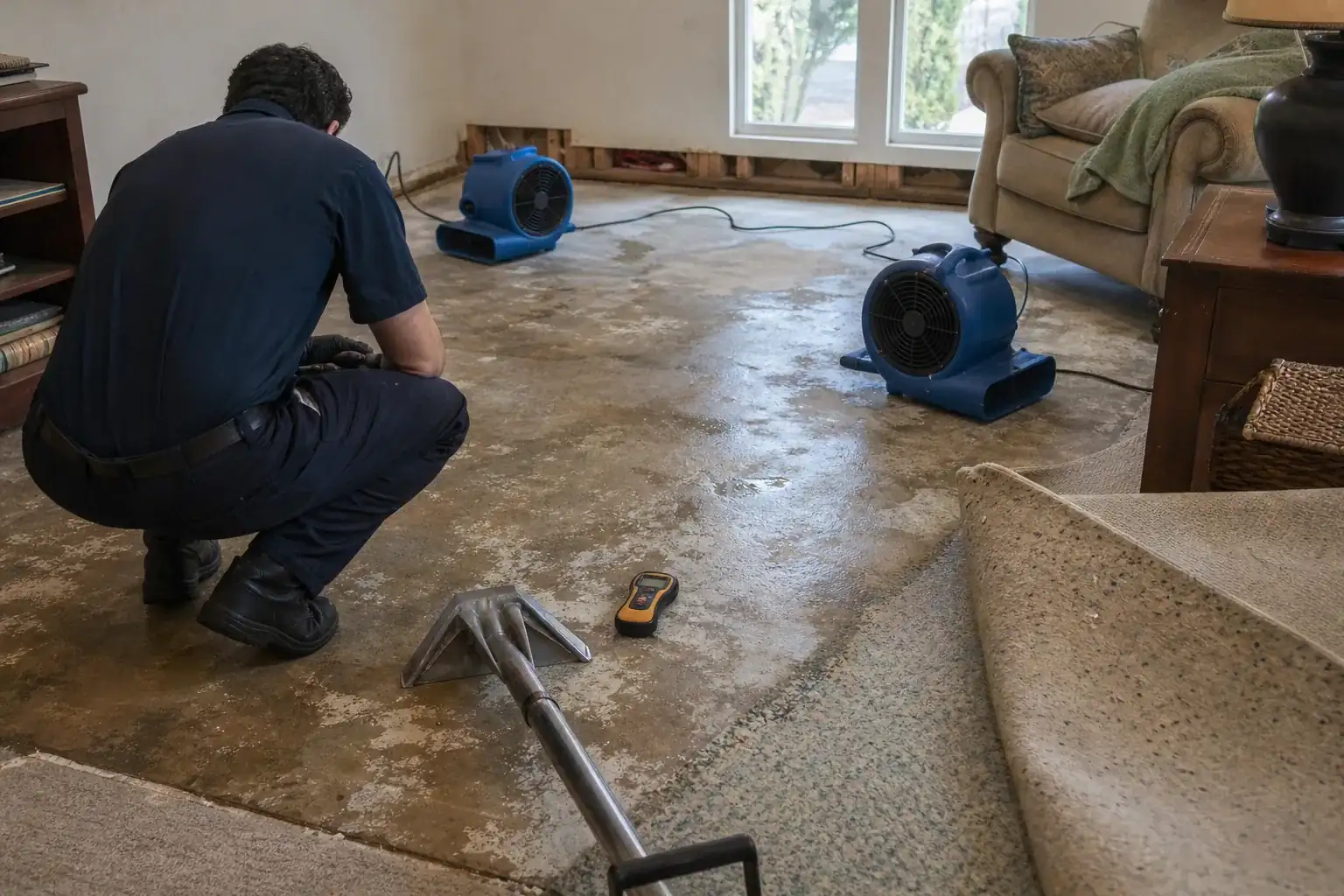
Extraction, structural drying and moisture verification run in that order, each one finishing before the next begins, so water comes out of the structure instead of staying sealed inside it.
-
Phase 1
Extraction and pump-out
Close or cover the source, pump out deep water, then extract what is left so it stops soaking into floors and walls.
Capability Commercial-grade water extraction.
-
Phase 2
Industrial dehumidification and structural drying
Move air across wet surfaces and pull the moisture out of it, so the water inside walls, subfloor and framing leaves the structure.
Capability Structural thermal drying and controlled dehumidification.
-
Phase 3
Moisture verification and sanitization
Confirm every material reaches a dry reading, sanitize the surfaces the water touched, and remove what could not be dried.
Capability Advanced moisture detection and air cleaning where odor or particles remain.
Recognise the problem
What water damage looks like in a Rialto property
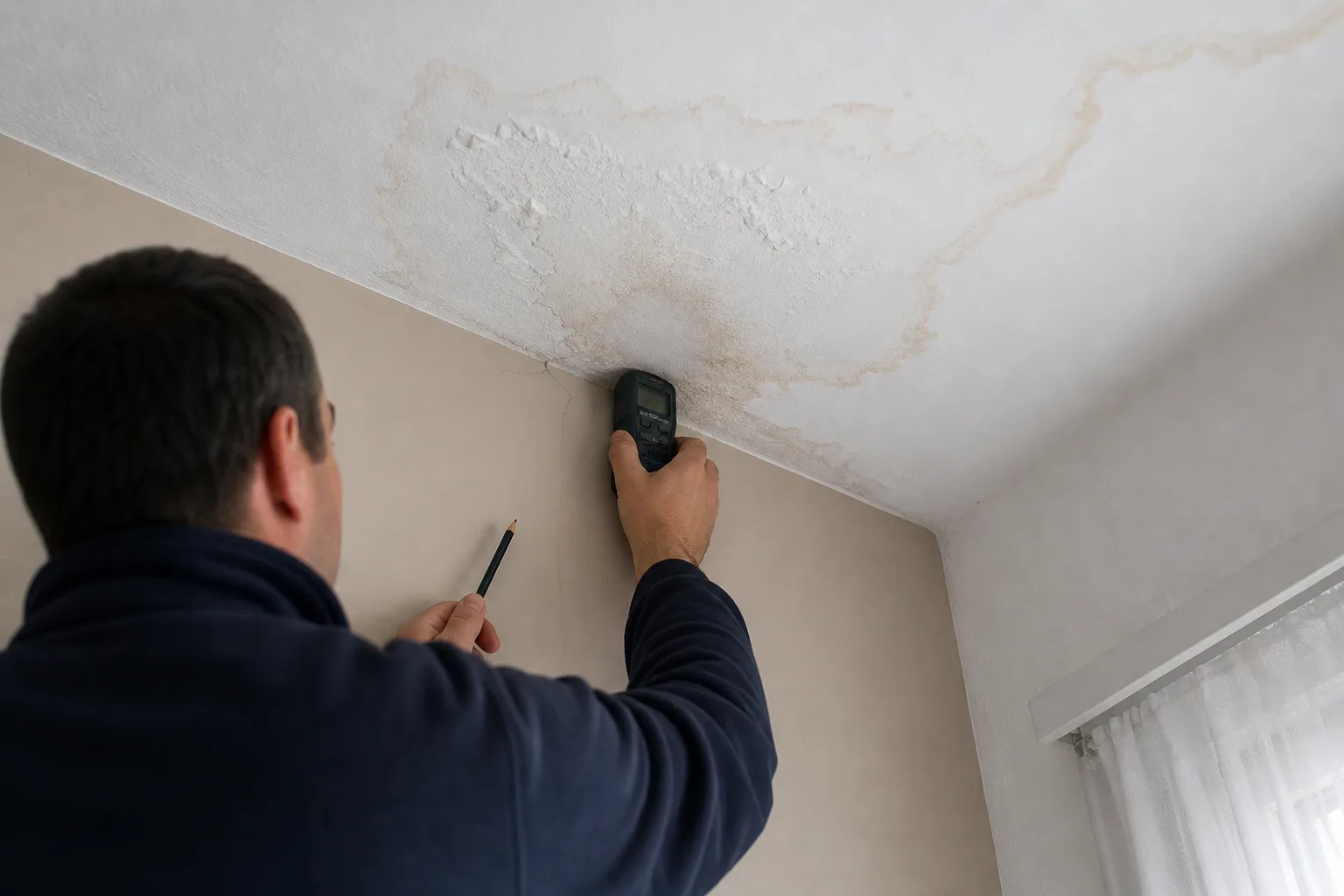
Match what you see to a card. Urgent means water is still arriving or spreading; routine means it has stopped but is still inside the structure.
Service categories
Most requested
Urgent
Water still arriving
A burst supply line, a failed appliance hose or an overflowing fixture. Shut off the source if it is safe to reach, then call.
See the guide UrgentCeiling stained, bulging or dripping
Water held above a ceiling can come down all at once. Stay out from under a sagging section and keep power away from the wet area.
See the guide UrgentSewage smell or a backed-up drain
Water that comes up through a floor drain or tub is contaminated. Keep people and pets out of it and do not try to dry it yourself.
See the guide UrgentStorm water at a door, garage or foundation
Rain that pools against the building goes to the low points first: a threshold, a garage floor, a patio door.
See the guide RoutineWarped baseboards, cupped floors, peeling paint
Swelling and cupping show up days after the water stopped. They mark where moisture readings, not appearances, need to settle it.
See the guideLocal conditions
What shapes water damage in Rialto
Single-family homes and mobile homes
Housing stockSingle-unit detached houses make up 70.8 percent of Rialto's housing units, multi-unit buildings 20.8 percent and mobile homes about 6 percent.
In a house, a failed line or a roof leak lets water run across the floors of one structure and into its walls and ceiling, and a mobile home's light floor decking and underfloor cavity hold water out of sight.
Water that has reached the floor or a wall keeps soaking after the source stops, so call once you see wet or soft flooring or a ceiling stain.
Rialto Channel overflow
Water and terrainThe City's hazard mitigation plan describes the 6.79-mile Rialto Channel, which crosses Rialto from north to south and is dry most of the year, as able to overtop at several road crossings in a major storm, with possible sheet flooding and interior mudflows in the neighborhoods beside it.
Storm water and mud that leave the channel reach the low rooms, the garage and the base of exterior walls beside it, and mud holds water against the material long after the rain stops.
Keep out of storm water that came from the street or a channel, and call once runoff or mud crosses your threshold.
Why call
Why the first call matters in Rialto
Moisture keeps moving after the water stops. Call as soon as you see it spreading, while drying in place is still possible.
- Professional water damage restoration typically follows a set process of extraction, drying and moisture monitoring, set out in the IICRC S500 standard used across the industry.
- Water wicks up drywall and spreads under flooring while it sits, so close the source and call before it reaches the next room.
- Calls come from across Rialto and San Bernardino County: call the moment you see water, not after it stops.
1
Restoration needs
Water, storm and related property damage can each call for a different kind of work.
2
Local conditions
Water damage in San Bernardino County depends on local climate, construction and flood patterns, so those are set out below.
3
Call before it spreads
Close the source and keep clear of wet outlets. Then call: drying starts sooner, and more of your home stays in place.
What you are seeing
Water on your floor, a stain overhead, or baseboards gone soft
While it sits, clean water from a supply line turns dirty, swollen trim splits at the seams, and drywall softens at the base. A room you could dry in place becomes a room that loses its walls and floor covering. Standing water needs water extraction in Rialto before it wicks upward into the framing. Call while your materials can still be dried instead of replaced.
Loss risk
What standing water destroys while it sits
The puddle is the part you see. The larger loss is the water that soaks into gypsum, particleboard and carpet pad, then wicks up the bottom plates of your walls and keeps rising after the floor looks dry.
- Drywall
Wet gypsum loses strength and crumbles at the base, so a section that could have dried becomes a cut-out.
- Trim and cabinet bases
Particleboard and MDF swell at the seams and rarely lie flat again.
- Carpet pad
The pad holds water against the slab and feeds odor through the whole room.
- Framing
Sill plates and studs that stay wet start to decay, and a drying job turns into structural work.
Restoration scope
What water damage restoration covers
Professional restoration treats the whole wet area, not only the puddle. The scope follows where the water came from and what it reached in your home.
- Extraction
Industrial extraction pulls water out of carpet, pad and the surface of the slab.
- Moisture mapping
Readings across floors, walls and cabinets trace how far the water traveled beyond the visible stain.
- Structural drying
High-capacity dehumidification draws moisture out of wall cavities, framing and concrete until each material reaches a dry standard.
- Controlled removal
Pad, swollen trim and drywall that cannot dry come out so the structure behind them can.
- Fire water drying
Hose and sprinkler water left after a fire is extracted and dried, alongside soot and smoke residue cleanup.
What you are seeing
Atmospheric river storms, flash flooding and hillside runoff
Water came in under a garage door, across a patio slider, or through a ceiling below the roof after days of winter rain. Atmospheric-river storms soak roofs, stucco and the ground against your foundation, and water enters at every weak point in San Bernardino County homes.
- Atmospheric-river rain
Days of rain drive water through roof penetrations, door thresholds and stucco cracks, wetting insulation, drywall and framing.
- Flash flood runoff
Water that flows in across a threshold soaks carpet, pad and the bottom of every wall it touches.
- Mud and hillside runoff
Slopes saturated by rain send mud and silt into garages and ground-level rooms, where silt stays wet and heavy.
A ceiling stain after a storm is roof leak water damage in Rialto, and the wet insulation above it keeps feeding the stain.
Shut off the water at the main valve, then call: extraction now decides how much of your Rialto home dries in place.
(909) 640-6931What you are seeing
Slab leaks, water heaters, pipes and appliances
A water heater tank is leaking into the garage, a warm damp patch has appeared on the floor, or water is seeping from under the dishwasher. Indoor sources keep feeding water into your Rialto home until the valve closes.
- Water heater failure
A split tank or failed fitting releases water into the drywall, the garage slab and the wall behind the unit.
- Slab leaks
A leaking line under a slab-on-grade floor wets flooring from below, so tile loosens, wood cups and carpet stays damp along one path.
- Burst pipes
A failed supply line inside a wall soaks the cavity before any stain shows through the paint.
- Appliance overflows
Washer hoses, dishwasher seals and ice maker lines leak under cabinets and toe-kicks, where the water sits out of sight.
A split tank is water heater leak damage in Rialto, and a wet floor with no visible source can be slab leak water damage in Rialto. Finding and fixing a leaking line is plumbing work; restoration handles the wet slab, the flooring on it and the walls around it.
What you are seeing
Hose water, soot and smoke after a fire
After a house fire, the water that stopped the flames is still in your home. It soaks the floors, ceilings and wall cavities below the fire, and it carries ash and soot into every material it touches.
Extraction and drying clear that water, and soot, smoke and odor cleanup follows on the surfaces the smoke reached. Call before damp walls and smoke residue set together.
Safety protocol
Make the house safe before anything else
Some water damage is a safety problem before it is a property problem. Check these first:
- Water near outlets or cords
Stay out of the room until the power to that circuit is off.
- A sagging ceiling
Clear the room below and keep everyone out, because a ceiling holding water can come down.
- Gas smell near the water heater
Leave the house and call the gas utility from outside.
- Dark or foul water
Treat it as contaminated and keep your skin, children and pets away from it.
- Smoke odor or soot
Stay out until the fire department clears the house.
Property type
Slab homes, crawl spaces, rentals and businesses
In a single-story home on a slab, water spreads sideways under the flooring before it surfaces, so the wet area is larger than the stain you see. In a raised-foundation home, water collects in the crawl space and soaks the subfloor from beneath.
A manufactured home holds water in the belly wrap and the floor decking, a condo leak can reach the unit below yours, and a storefront loses business while it dries. Whatever the building, property specific water damage in Rialto follows its construction.
A rental between tenants or a house left empty is the worst case, because a leak runs for days unseen, and vacant seasonal home water damage in Rialto spreads well past the first stain.
Drying verified
Drying ends when the readings say so
A floor that looks dry can still hold water in the slab, the bottom plates and the cavity behind the drywall. Structural drying continues until every wet material matches a dry reference reading from an unaffected room.
- Starting map
The first readings record every room, wall and cabinet the water reached.
- Dry standard
An unaffected room sets the target each wet material has to reach.
- Clearance
Final readings confirm the structure is dry before walls close or new flooring goes down.
Triage order
Why calling promptly changes what you keep
Clean water from a supply line turns foul the longer it sits, drywall that could have dried has to be cut out, and a damp slab keeps feeding moisture into new flooring. Each room the water reaches adds to the area that has to dry.
Shut off the source, keep clear of anything electrical, photograph every wet room and the waterline on your walls, and call about water damage restoration in Rialto. The sooner extraction starts, the more of your home dries in place.
Housing stock
How Rialto buildings take on water
Half the homes are older than 1980
Housing stock46.3 percent of Rialto's housing units were built before 1980, and another 32 percent were built in the 1980s.
Plumbing, water heaters and roofs in homes of that age are more prone to fail, and a slow leak can run behind a wall or under a floor before it shows.
A stain, a soft baseboard or a bubbled patch of paint means water has already been in the material, so call before it spreads through the framing.
Land and weather
Water, soil and weather around Rialto
Drainage that lags storm volumes
Water and terrainRialto's 2011 Storm Drain Master Plan identified storm drain improvements still needed across the city, and the hazard mitigation plan says the Rialto Channel above the Metrolink right of way is shallow and may not handle the storm volumes in that master plan.
Where drains and culverts cannot carry a heavy storm, water stands in streets and yards and runs under doors, garage thresholds and the base of low walls.
Water that came in during a storm keeps soaking the floor and wall behind the visible wet spot, so call once water crosses a threshold instead of waiting for the street to drain.
Service area
Serving Rialto & San Bernardino County
Coverage radius
Covered ZIP codes (2): 92376, 92377
Not sure your address is inside the coverage area? Call: the address of the damage confirms coverage.
Questions
Rialto water damage — FAQ
What should you do first when water is spreading in your Rialto home?
Shut off the water at the main valve if a pipe or an appliance supply line is the source, and stay out of any room where water is near outlets or cords. Move people and pets out of the wet rooms. Then call before the water reaches the next room or soaks through to the floor below.
Is it safe to stay in a room with standing water?
Not when the water reaches outlets, cords or a power strip: leave the room, stay out of the water, and call from a dry spot. Treat water from a backed-up drain, a sewer line or outside flooding as contaminated, and keep children and pets away from it. Call 911 if anyone is hurt or a ceiling sags over people.
Why does it matter how soon you call about wet floors or walls?
Water keeps moving after the surface looks dry. It wicks up drywall, spreads under flooring and soaks into insulation and subfloor, and the longer it sits, the more material you lose. Calling promptly keeps the damage limited to what you can see.
What happens to water you cannot see?
It runs under your flooring, behind baseboards and into wall cavities, and soaked drywall and subfloor keep releasing moisture long after the surface dries. Water from a drain backup carries contamination into every layer it reaches, so call before hidden water spreads into your framing.
What records should you keep for your insurer?
Take photos and video of every wet room, the source and your damaged belongings before you move or throw anything out, and keep any failed part, such as a burst supply line. Your insurer decides what your policy pays for, so ask them directly.
Which parts of Rialto and San Bernardino County can you call about?
Any address in Rialto and the surrounding San Bernardino County area, including homes and businesses near the city line.
Water damage keeps spreading until it is dried.
Call from Rialto before the water reaches the next room, the subfloor or the framing behind your walls.